Chime Tsugphü’s Birth Anniversary
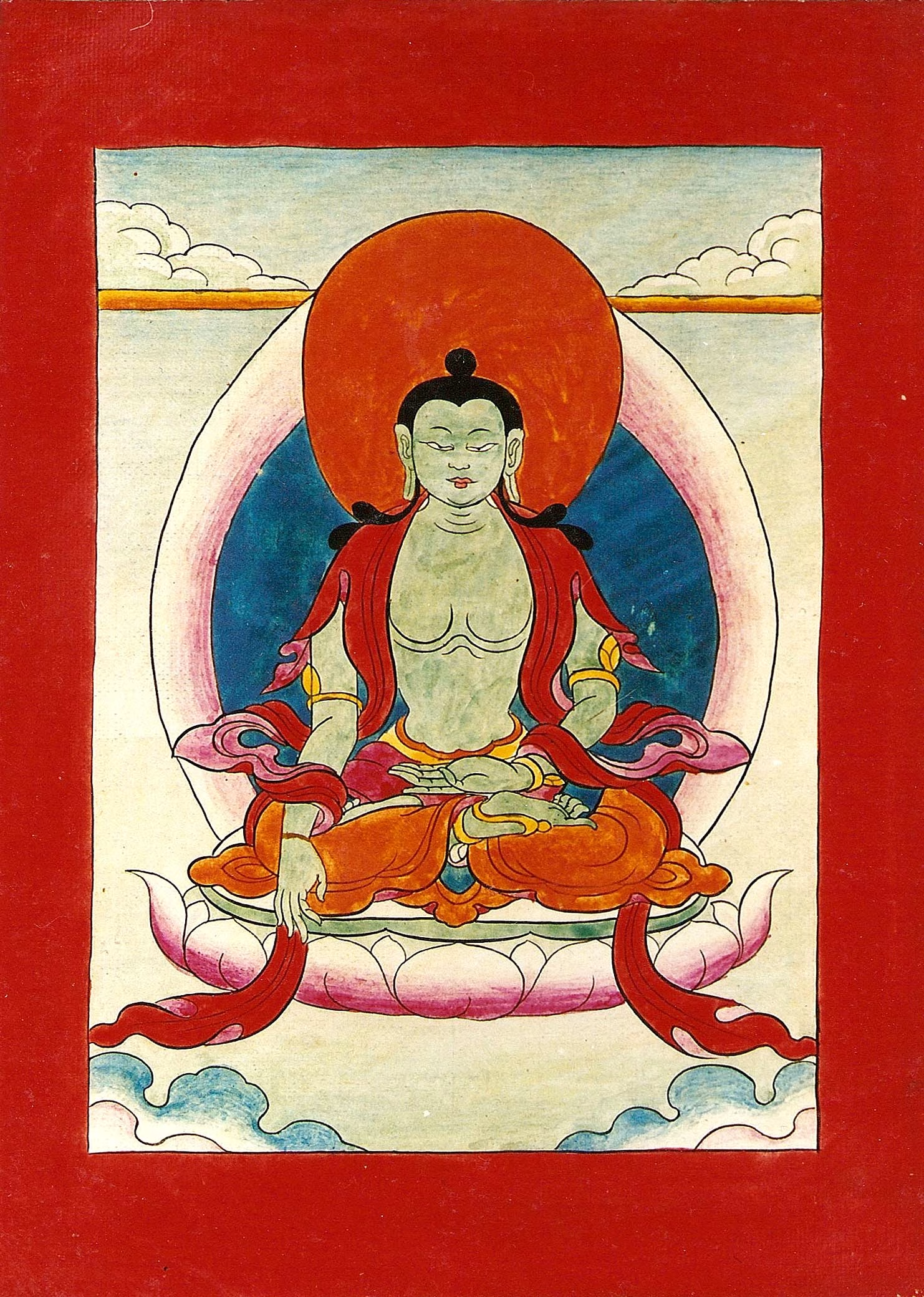
Today, 8th day of the 2nd month in the Shen system[1] (8th day of the 1st month of Horda system)[2] is the Anniversary of Chime Tusgphü’s[3] birth. His name means Deathless One with a Precious Topknot, and he is also known as Salwa,[4] which means Clarity. A previous incarnation of the Buddha of Yungdrung Bön, Tönpa Shenrab Miwoche,[5] Chime Tsugphü is the eighth Buddha in the Mind-to-Mind Transmission Lineage of the Buddhas.[6]
He was born in the pure dimension[7] of Sipa Yesang,[8] the Primordially Pure Realm, and his parents are both Buddhas. His father is Buddha Thrulshen Nangden,[9] Shen of Magic Power Endowed with Light and his mother is the female Buddha Zangza Ringtsün,[10] Virtuous Noble Lady of Far-reaching Goodness. His birth was very unique because his father Thrulshen Nangden emanated a special Buddha form – a turquoise cuckoo called Barnang Khujug,[11] Cuckoo of Intermediate Space – which landed on his mother’s right shoulder while she was resting on the shore of a lake.
After some time, Zangza Ringtsün gave birth to a son. Because she was a little ashamed of giving birth to a son seemingly without a father, she built a shelter from golden sand and left the boy there. But when she came back nine days later, she saw her son unharmed and happy. Seeing his mother, the boy leapt into the sky where remained in the mediation posture. His body was turquoise colour, and he had a magical knot of crystal hair on the top of his head, so she called him Chime Tsugphü – Deathless One with a Precious Topknot.
Later, Chime Tsugphü studied with Shenhla Wökar.[12] Having achieved complete Buddhahood, he passed the Dzogchen[13] and tantric[14] cycles which he had received to various disciples, including Buddha Sangwa Düpa[15] – ‘Compendium of the Innermost.’ Sangwa Düpa is the ninth and last Buddha in the Mind-to-Mind Transmission Lineage of the Buddhas. Chime Tsugphü also taught several human disciples, including the early mahasiddha Tagla Mebar,[16] Flaming Tiger, to whom he transmitted the Nine Tantras of Walphur.[17]
In 16017 BC, Chime Tsugphü incarnated on this Earth in Wolmo Lungring,[18] a land somewhere in present-day Central Asia. He became known as Supreme Shen Teacher Mura Tahen,[19] or Tönpa Shenrab Miwoche in Tibetan, and established the Yungdrung Bön tradition.
Compiled by Dmitry Ermakov from: Rdzogs pa chen po zhang zhung snyan rgyud kyi brgyud pa’i bla ma’i rnam thar bzhugs so / རྫོགས་པ་ཆེན་པོ་ཞང་ཞུང་སྙན་རྒྱུདཀྱི་བརྒྱུད་པའི་བླ་མའི་རྣམ་ཐར་བཞུགས་སོ། (༧ བཀྲི་རྟན་ནོར་བུ་རྩེའི་བླ་བྲང་གི་གློག་ཀླད་ནང་དཔར་རྩ་བསྒྲིགས།༢༠༠༢ fols. 25-25) & Karmay, Samten G. The Treasury of Good Sayings (Delhi: Motilal Banarsidass Publishers Private Limited, 1972), pp. xxi-xxvi.
[1] shen lugs / གཤེན་ལུགས།
[2] hor zla / ཧོར་ཟླ།
[3] ‘Chi med gtsug phud / འཆི་མེད་གཙུག་ཕུད།
[4] Gsal ba / གསལ་བ།
[5] Ston pa Gshen rab mi bo che / སྟོན་པ་གཤེན་རབ་མི་བོ་ཆེ།
[6] bder gshegs dgongs brgyud / བདེར་གཤེགས་དགོངས་བརྒྱུད།
[7] ‘Og min / འའོག་མིན།
[8] Srid pa ye sangs / སྲིད་པ་ཡེ་སངས།
[9] ‘Phrul gshen snang ldan / འཕྲུལ་གཤེན་སྣང་ལྡན།
[10] Bzang za ring btsun / བཟང་ཟ་རིང་བཙུན།
[11] Bar snang khu byug / བར་སྣང་ཁུ་བྱུག
[12] Gshen lha ‘od dkar / གཤེན་ལྷ་འོད་དཀར།
[13] Such as Zhang zhung snyan rgyud / ཞང་ཞུང་སྙན་རྒྱུད། and Byang sems gab pa dgu skor / བྱང་སེམས་གཔ་དགུ་སྐོར།
[14] Such as Gsas mkhar mchog lnga / གསས་མཁར་མཆོག་ལྔ།
[15] Gsans ba ‘dus pa / གསང་བ་འདུས་པ།
[16] Stag la me ‘bar / སྟག་ལ་མེ་འབར།
[17] Dbal pur rgyud dgu / དབལ་ཕུར་རྒྱུད་དགུ
[18] ‘Ol mo lung ring / འོལ་མོ་ལུང་རིང་།
[19] Dmu ra ta han / དམུ་ར་ཏ་ཧན།
Cover image courtesy of Yongdzin Lopön Tenzin Namdak Rinpoche, first published in Namdak, Yongdzin Lopön Tenzin, trnscr. & ed. Ermakova, C. & Ermakov, D. Masters of the Zhang Zhung Nyengyud: Pith Instructions from the Experiential Transmission of Bönpo Dzogchen, (New Delhi: Heritage Publishers, 2010). Copyright © Foundation for the Preservation of Yungdrung Bön, 2026.
3 Responses
Has any research been done on the similarities between Chime Tsugphu’s birth and that of Garab Dorje? In both cases there is an immaculate conception by an enlightened father, followed by the mother feeling ashamed and hiding the child but coming back later to find him miraculously unharmed. Those seem to me to be very strong parallels.
Thank you for your question. Yes, there are very strong parallels and they stem from the fact that, historically, Dzogchen lineages of both Bönpo and Buddhist Dzogchen go back to Tönpa Shenrab Miwo, Buddha of Yungdrung Bön. This was researched By Chögyal Namkhai Norbu in his book ‘The Necklace of Zi’ (Shang Shung Edizioni, 2004), where he clearly demonstrated that 12 Primordial Masters of Buddhist Dzogchen are actually 12 Masters of one of the lineages of Bönpo Dzogchen, namely Rdzus skyes gsang ba ‘dus pa nas rgyud pa, one of the transmission lineages of Zhang Zhung Nyengyu Dzogchen. At the end of this lineage we find a master called Zhang Zhung Garab (Zhang Zhung dga’ rab), who, according to Namkhai Norbu, is the same person as Garab Dorje and is the source of Buddhist Dzogchen. This was seconded by Yongdzin Lopön Tenzin Namdak Rinpoche. During the 10th century there was yet another infusion of Bönpo Dzogchen into Tibetan Buddhism. It came via Nyingma master Zurchen, who was a friend of Bönpo yogi Shengyal Hlatse. Zurchen asked Shengyal Hlatse for Dzogchen teachings and eventually received some parts of Nyamgyu, the Experiential Transmission, from Shengyal Hlatse’s root lama Pönchen Tsenpo. Zurchen then changed some Bönpo names into Buddhist so that the teachings would be accepted within Buddhist circles. And that is probably when Garab Dorje’s story could have been conflated with that of Chime Tsugphu.
Also, you can read the Introduction in this book, ‘Masters of the Zhang Zhung Nyengyud,’ https://www.amazon.co.uk/Masters-Nyengyud-Yongdzin-Tenzin-Rinpoche/dp/8170262682
Thank you for your in-depth response! I’ve read Yongdzin Rinpoche’s text, but I will check out the Necklace of Zi as well.
It’s interesting, I would have thought that Garab Dorje’s life story would have already been well-established before the 10th century, but maybe not. I’m not very well-versed on the dates for the Buddhist lineages.