About the Origins of Lusang
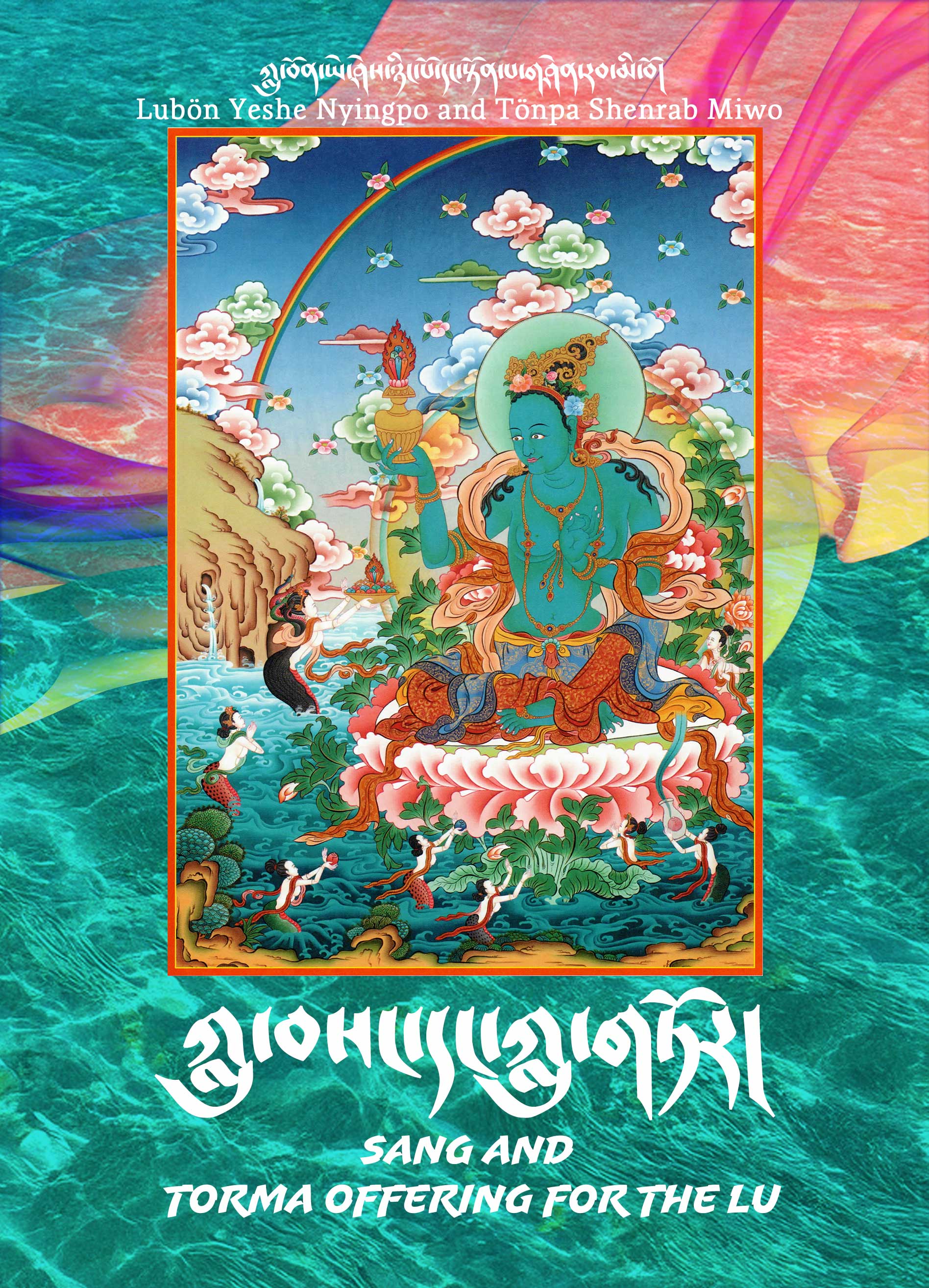
In ancient times there was a man in our Yungdrung Bön tradition called Lubön Yeshe Nyingpo.[1] He is neither sambhogakaya nor nirmanakaya,[2] but a great practitioner. Like you. He was a teacher of the nagas[3] and could teach them Dzogchen.[4] In our tradition, there are three versions of the Dzogchen Teachings: short, medium and extensive. Three special masters appeared after Buddha Tönpa Shenrab:[5] Yongsu Dagpa[6] who was a teacher of gods, Milyu Samleg[7] who was a teacher of humans, and Yeshe Nyingpo who was a teacher of nagas. This person here, depicted on the cover of the practice book, is Yeshe Nyingpo, the nagas’ teacher. Here, in the lake, you can see many beings. The upper part of their body looks like that of a human or god, but the lower part looks like a snake’s tail. These are nagas. We believe that nagas usually live in water, in the oceans and seas. In Tibet, around the Himalayas, there is a place called Chumig Gyatsa.[8] Nowadays this area, Lo,[9] is on the border between Tibet and Nepal. In ancient times, the area was part of Tibet but nowadays it lies within Mustang and other borderland regions of Nepal. So in this area, there areChumig Gyatsa, One Hundred Springs. This practitioner, Lubön Yeshe Nyingpo, lived in that region. Many nagas lived in those springs, and he taught them Dzogchen. The short version of the Dzogchen teachings. Why the short version? Because generally we say that the nagas have very clear minds, but there isn’t much space inside them! So the short version is most suited to them. For humans, the medium version is best, while the gods have a lot of space but great laziness, so the extensive version is suitable for them.
On the cover here you can see the Naga Master Lubön Yeshe Nyingpo, and around him in the lake are many nagas, making offerings or maybe receiving teachings from him. On the thangka[10] here, the Naga Master is holding a precious bumpa[11] or vase, so I think he is offering a water torma or lutor[12] to the nagas. The vase contains water mixed with cow’s milk and some herbal medicines. If you want to make an offering to the nagas in this way, you can use some special herbal medicines, but be careful because some may contain blood or other animal ingredients or poisons etc. The nagas don’t like that.[13]
This text is called Lusang.[14] Lu[15] is the Tibetan word for naga, and sang[16] means purification. In Tibetan, the word sang can also refer to milled herbal incense. There are many different types of herbal incense. In the past, Tibetan incense was very pure but nowadays it may be mixed with something because selling it has become big business so people tend to choose whatever smells nicest. They use that when they blend their incense and don’t care so much about the medicinal properties. If you go to a market you can find so many different types of incense – Chinese incense, Hindu incense, there are a lot! So people who want to make business buy a lot of these different milled herbs and mix them together. Milled herbal incense is very popular in the Himalayas, but nowadays they mix a lot of different ingredients together so when you burn them, althought they may give off very fragrant smoke, in the end this may be poison to the lu. However, if you find some juniper – or shugpa[17] as we call it – that is very good; it gives a good smell and is not poisonous. You can also mix some biscuits, butter and flour together, add some dried juniper and burn all this together. Then you can be sure that this is pure and you won’t have any doubts. You can use juniper berries but the leaves are better. And you can add some artemisia, what we call khempa.[18] People use it for moxa. We can also use resin such as frankincense. In the past, people used to cut a tree’s bark, take the sap and let it dry, and then at night you can use it instead of a torch. This is also good, very good, to add to the sang for lu.
We have some packets of special sang here. This is what the label says:
Precious Treasury of Lusang
This Lusang (Sang for the Nagas) combines general ingredients such as grains, white and sweеt offering substances, six good ones, medicine for the Lu, flowers, incense and various kinds of good smelling perfumes.
The benefit of offering Lusang: it removes and purifies impurities, filth and defilements, reconciles disagreements, and pacifies poverty, diseases, epidemics, conflicts and wars. May it increase Long-life, good luck and power, the capacity to ascend!
Here, it mentions the Naga King. Dzambhala[19] is the god of property, wealth god. This text says that Dzambhala is King of Nagas. He is this one here on the thangka, surrounded by many nagas. And here is the Queen, too.
The ritual text mentions the mountains, hills, cliffs and so on, and this is in keeping with the landscape in Tibet. The text also mentions different animals. But I don’t think you have yaks! In ancient times, owning a lot of horses, cows, yaks, dri,[20] sheep and so on was a sign of wealth. You have sheep and cows here. And nowadays you have cars and televisions and iPhones! But they are not mentioned in the text! Gold and silver are not mentioned here, either. Nor are aeroplanes or trains. Nothing! But people and property are mentioned later in the text, so telephones and planes are included in this!
Q: Do nagas always take the form of a half snake, as here in the thangka?
A: Usually yes, they look like this. If you practise this Lusang and make water offerings to the nagas – Lutor – then you may dream of snakes. You can check how successful your practice has been according to your dreams. If the snakes in your dream seem happy and don’t harm you, if they are just slithering around in a beautiful garden with many flowers, then that is a good sign. Or maybe you dream of a snake that tries to harm you, or that seems unhappy, or it looks angry or something, then that is a bad sign.
If you want to practise this, you can do the Bodhichitta[21] practice first. There is no need to do Guru Yoga.[22] But the day is very important. We have made a table of special days here, according to Lubön Yeshe Nyingpo himself. You can check the dates against a Tibetan astrological calendar.
Q: What is the point of making offerings to nagas? What is the benefit?
A: Read the booklet!
Sometimes we humans can do something that harms the lu or any other powerful spirits and then they become angry and may send different diseases or epidemics like Covid 19. Or sometimes they can cause droughts. In Tibet there is sometimes very heavy snowfall or huge hail that harms humans and animals. So when we burn this sang and make offerings, we ask the nagas: please don’t do this.
Q: I moved house because in my old place I always had problems with water. With flooding from below. So I moved. To the top floor. But now the same thing is happening in my new place – I have water leaking from the roof!
A: Yes, you should offer this incense and read the text again and again. You can practise this whenever there is a positive day for offering to the nagas.
Q: But if everything is just a reflection of the Natural State,[23] just visions and Empty Form,[24] then surely nagas are just Empty Form, too?
A: Yes, you are right. If you are a great Dzogchen practitioner, then all obstacles naturally purify and disappear. No spirits can harm you. But if you are an ordinary person or a Tantric practitioner,[25] then you can use this method which was taught by the Buddhas, and the nagas and other spirits will like you!
Teachings by Drubdra Khenpo Tsultrim Tenzin, Tuscany, Italy, May 2025
[1] Tib. Klu bon Ye shes snying po / ཀླུ་བོན་ཡེ་ཤེས་སྙིང་པོ།
[2] Tib. rdzogs sku, sprul sku / རྫོགས་སྐུ། སྤྲུལ་སྐུ།
[3] Tib. klu / ཀླུ།
[4] Tib. rdzogs chen / རྫོགས་ཆེན།
[5] Tib. Ston pa Gshen rab mi bo che / སྟོན་པ་གཤེན་རབ་མི་བོ་ཆེ།
[6] Tib. Yongs su dag pa / ཡོངས་སུ་དག་པ།
[7] Tib. Mi lus bsam legs / མི་ལུས་བསམ་ལེགས།
[8] Tib. Chu mig brgya rtsa / ཆུ་མིག་བརྒྱ་རྩ།
[9] Tib. Glo / གློ།
[10] Tib. thang ka / ཐང་ཀ།
[11] Tib. bum pa / བུམ་པ།
[12] Tib. klu gtor / ཀླུ་གཏོར།
[13] For a full list of Do’s and Don’ts when making offerings to the nagas, see: https://yungdrungbon.co.uk/2025/05/30/lusang-dos-and-donts/
[14] Tib. klu bsangs / ཀླུ་བསངས།
[15] Tib. klu / ཀླུ།
[16] Tib. bsangs / བསངས།
[17] Tib. shugs pa / ཤུགས་པ།
[18] Tib. mkhan pa / མཁན་པ།
[19] Tib. ‘Dzam lha / འཛམ་ལྷ།
[20] Tib. ‘bri / འབྲི། – female yak.
[21] Tib. byang chub sems / བྱང་ཆུབ་སེམས།
[22] Tib. bla ma’i rnal ‘byor / བླ་མའི་རྣལ་འབྱོར།
[23] Tib. gnas lugs / གནས་ལུགས།
[24] Tib. stong gzugs / སྟོང་གཟུགས།
[25] Tib. sngags pa / སྔགས་པ།
Featured image: Cover of the booklet Sang and Torma Offering for the Lu with thangka of Lubön Yeshen Nyingpo by Geshe Mönlam Wangyal, courtesy of the painter. First published in Tsadzin Lopön Geshe Mönlam Wangyal, The Eighty Mahasiidhas of the Mother Tantra: The Sacred Art of Tibetan Thangkas, pp. 26-27.
One Response
[…] This year we published more details on how to make offerings to the Lu water-spirits and the history of this practice. […]